
 NU is all about fresh perspectives. So is our website.
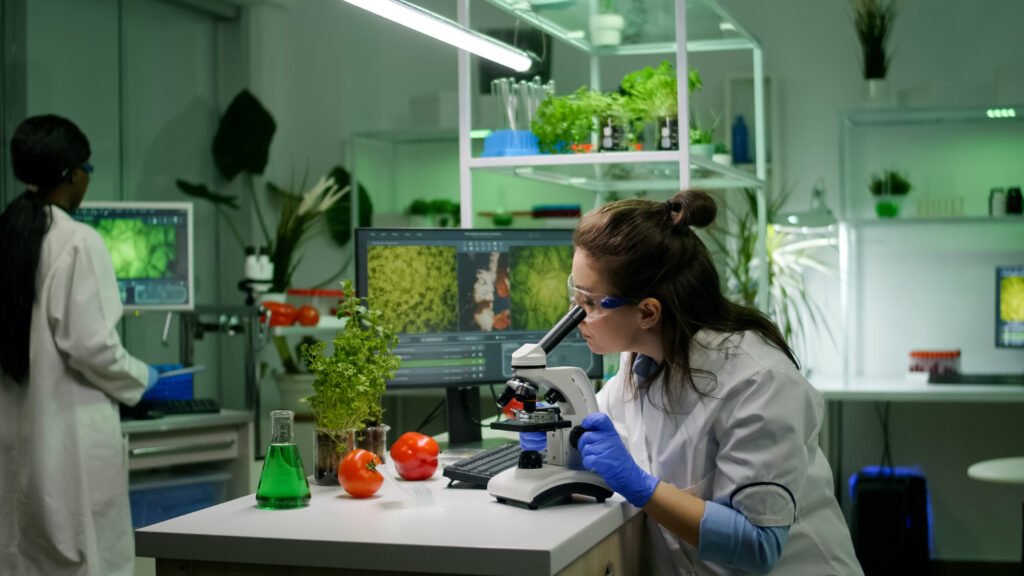
This blog provides complete insights into BTech Biotechnology 2026, including btech biotechnology eligibility, entrance exams, updated biotechnology syllabus, career opportunities, and future industry scope. Readers will learn how biotechnology is transforming healthcare, agriculture, and research, along with how NIIT University offers industry-linked learning, practical exposure, research opportunities, and strong placement support for Biotechnology students.
The world has entered a new era of science, innovative healthcare, artificial intelligence, and biotechnology. Innovations in medicine, sustainable agriculture, and genetics, among others, are making biotechnology one of the most prominent industries today. For those planning their career after class 12th, BTech in biotechnology in 2026 would be an ideal choice to kickstart their career.
Nowadays, industries are not only seeking students with technical knowledge but also those who can innovate, conduct research, and solve their challenges. Therefore, Biotechnology has become one of the fastest-growing career options in the nation and around the globe.
But before making any decision about your career in biotechnology, one must get aware of the admission process, entrance tests, career opportunities, btech biotechnology eligibility, and updated biotechnology syllabus.
With its wide range of applications in medicine, food technology, the environment, bioinformatics, agriculture, etc., Biotechnology has become a crucial player across industries. As we have been observing an unprecedented increase in the need for biotechnology expert’s post-pandemic, demand will continue to rise in the coming years.
In addition to this, as more and more students are looking for universities offering biotechnology courses and want to know btech biotechnology eligibility criteria, it has become crucial to gain awareness about the course curriculum as well.
The future scope of Biotechnology is vast, as it combines biology and technology to solve various problems across human health and industry. Whether in cancer research or vaccine development, Biotechnologists are shaping the future of our world.
It is quite necessary to know about btech biotechnology eligibility before selecting the suitable university. Universities and institutes in India have somewhat the same btech biotechnology eligibility criteria.
Getting an idea about btech biotechnology eligibility criteria beforehand will help students strategize their preparation as well as select the most suitable universities for their BTech program.
Some of the entrance tests for biotechnology admissions include:
Students need to go through the btech biotechnology eligibility requirements and prepare accordingly for the entrance tests.
A biotechnology syllabus usually comprises the subjects from biology and engineering that are necessary to understand the core of this field.
Moreover, the updated biotechnology syllabus also includes lab work, live projects, research assignments, internships, and computational biology. Students who know the biotechnology syllabus in advance will be able to prepare better.
NIIT University is considered one of the best universities to pursue btech biotechnology eligibility criteria due to its industry-linked courses, research-oriented education, practical exposure, and innovations.
NIIT University continually updates its curriculum in line with advancements in industry and science. Practical exposure provided to students is related to:
Those students who are researching btech biotechnology eligibility would know that NIIT University accepts class 12 students with Physics, Chemistry, Mathematics/Biology, along with other btech biotechnology eligibility criteria as per the specific university.
Another main highlight of the BTech Biotechnology program at NIIT University is its biotechnology syllabus, which includes lab work, research, projects, and industrial exposure. Students gain practical experience alongside theoretical concepts to excel in the industry.
Students at NIIT University are encouraged to participate in various research projects, innovative experiments, hackathons, and other activities. Students gain extensive practical experience across various disciplines of biotechnology.
As a result, students gain a comprehensive understanding of their biotechnology syllabus and develop problem-solving and analytical skills for industry.
After completing the biotechnology program, students can look forward to building careers in a variety of fields. Some of these sectors are:
Students with a good command of the biotechnology syllabus will definitely find great employment opportunities.
Biotechnology is no longer an exclusive scientific discipline; nowadays, it is the future of healthcare innovation, sustainability, and technology. If students plan to pursue BTech Biotechnology in 2026, they must consider their btech biotechnology eligibility and other factors regarding the chosen university.
Thanks to the industry-linked education model, research orientation, extensive lab exposure, and a modern biotechnology syllabus, the BTech Biotechnology program at NIIT University is now among the preferred choices of many students.
Students must complete Class 12 with Physics, Chemistry, and Mathematics/Biology from a recognized board with the required aggregate marks as per university guidelines.
The biotechnology syllabus includes Molecular Biology, Genetics, Biochemistry, Microbiology, Bioinformatics, Immunology, Genetic Engineering, and Environmental Biotechnology.
Popular entrance exams include JEE Main, CUET, state-level engineering entrance exams, and university-specific admission tests.
Biotechnology is growing rapidly due to advancements in healthcare, genetics, agriculture, environmental sustainability, and pharmaceutical research.
NIIT University offers industry-linked learning, advanced lab exposure, research opportunities, internships, industrial practice, and a modern biotechnology syllabus aligned with industry needs.
Students can build careers in pharmaceuticals, healthcare, diagnostics, biotechnology research labs, bioinformatics companies, environmental biotechnology firms, and research organizations.