
 NU is all about fresh perspectives. So is our website.
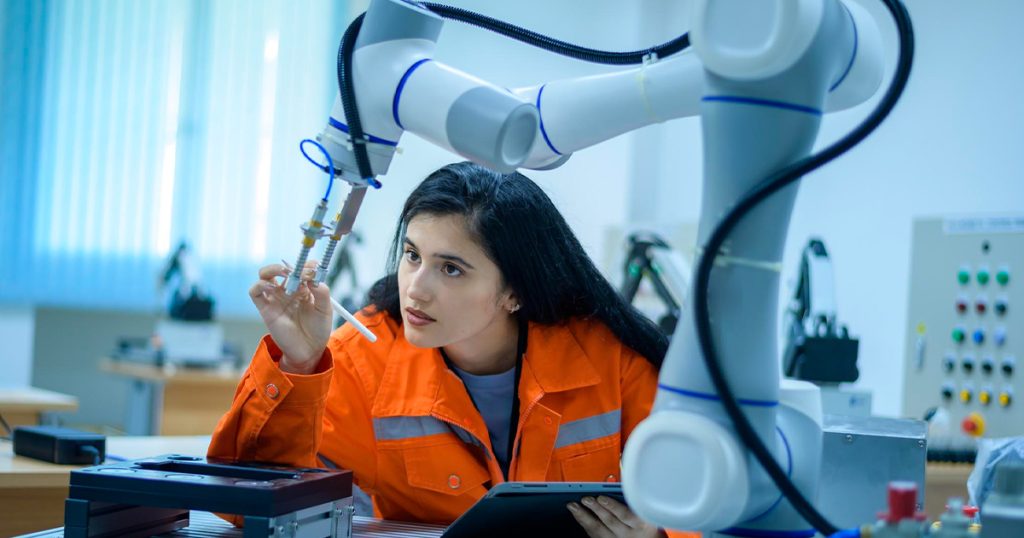
This report focuses on the growing world of robotics and automation and highlights at least 15 career paths available to engineers. Automation is a growing field that is enabling industries to become fully automated; as a result, there is a strong need for professionals in this field. This report will provide a thorough review of the different career paths.
The Era of robotics and automation: The next major development, driven by technological advances in robotics, artificial intelligence, and machine learning, has been revolutionising industries worldwide. Across manufacturing, logistics, healthcare, and agriculture, automation has been maximising efficiency, minimising costs, and ensuring safety. These technological changes have created a significant market for engineers specialising in robotics and automation, and this trend will intensify as future developments occur.
Why Engineers Should Embrace Automation: Engineers are uniquely positioned to lead the automation revolution. Their problem-solving skills, technical expertise, and understanding of complex systems make them ideal candidates for designing, implementing, and maintaining automated solutions. By embracing automation, engineers can:
Here are 15 automation careers that engineers should consider preparing for:
Description: Robotics engineers are responsible for the design, development, testing, and maintenance of robots and robot systems. Their applications range from industrial automation to healthcare and space missions.
Responsibilities:
Skills:
Programming (C++, Python, ROS)
Overview: Automation engineers develop automated systems and processes meant to assist in various sectors. Their aim is based on increasing efficiency, minimizing costs, and optimizing safety by using automation.
Responsibilities:
Skills:
Overview: Control systems engineers design and build systems that control and regulate processes and equipment. The work spans industrial automation, aerospace, and transportation applications.
Responsibilities:
Skills:
Description: The role of the mechatronics engineer: These professionals integrate concepts of mechanical, electrical, and computer engineering to develop automated systems. Their fields of application include robotics, automotive, and consumer electronics.
Responsibilities:
Skills:
Summary:
AI and Machine Learning engineers develop and apply AI and Machine Learning algorithms in automation applications. They get involved in various tasks, starting from predictive maintenance to self-driving robots.
Responsibilities:
Skills:
Overview: Data scientists analyze large datasets to identify patterns and insights that can be used to improve automation systems. They work on a wide range of applications, from optimizing manufacturing processes to predicting equipment failures.
Responsibilities:
Skills:
Overview: Industrial engineers optimize processes and systems to improve efficiency and productivity. They work on a wide range of applications, from manufacturing to logistics and healthcare.
Responsibilities:
Skills:
Overview: Manufacturing engineers design and develop manufacturing processes and equipment. They work on a wide range of applications, from automotive to aerospace and consumer electronics.
Responsibilities:
Skills:
Overview: Systems engineers design and develop complex systems that integrate multiple components and technologies. They work on a wide range of applications, from aerospace to defence and transportation.
Responsibilities:
Skills:
Overview: Software engineers design, develop, and test software for automation systems. They work on a wide range of applications, from control systems to robotics and AI.
Responsibilities:
Skills:
Overview:
Electrical engineers specializing in automation design, develop, and maintain electrical systems that power automated machinery and industrial processes. They play a critical role in integrating sensors, actuators, and control systems into automated environments.
Responsibilities:
Skills:
Instrumentation engineers focus on measurement and control instruments used in automated systems. They perform their jobs to ensure accuracy and efficiency in automated environments.
Responsibilities:
Skills:
Overview: Automation test engineers create test automation frameworks for the purpose of validating software, robotic systems, and other industrial automation solutions and applications.
Responsibilities:
Skills:
Industry 4.0 engineers find themselves at the crossroads of automation, the Internet of Things, artificial intelligence, and data analysis.
Responsibilities:
Skills:
Overview:
Autonomous systems engineers develop self-operating machines, including autonomous robots, drones, and vehicles, by combining robotics, AI, and automation technologies.
Responsibilities:
Skills:
Robotics and automation are no longer new technologies; they are shaping the future of industry. The growing demand for qualified engineers indicates significant opportunities for those who can adapt to technological advancements.
Embracing automation will enable engineers to be future-ready. The fields of robotics, AI, control systems, and smart manufacturing offer exciting opportunities that demand high technical know-how and an interdisciplinary approach. Needless to say, this puts the engineer at the forefront of innovation.
As the practice continues to enter Industry 4.0, engineers are expected to play an increasingly significant role in shaping the future of technology and society. Engineers who prepare for careers in automation can expect a bright, fulfilling future.
The future scope of automation engineers is very strong as industries increasingly adopt robotics, AI, and Industry 5.0 technologies. Automation engineers play a key role in designing, implementing, and optimizing automated systems across manufacturing, healthcare, logistics, and more. As technological advancements continue, demand for skilled automation professionals will keep growing globally.
AI is enhancing automation testing by improving accuracy and efficiency, but it will not completely replace automation test engineers. Professionals are still needed to design test frameworks, detect errors, and ensure system safety and robustness. Instead of replacement, AI will support and expand the role of automation testers.
Yes, automation testing is expected to remain a strong career option in 2026. With the rise of robotics, AI, and automated systems, companies require professionals to validate software and system performance. The growing adoption of automation across industries ensures long-term demand for skilled automation test engineers.